
As part of accident research, the GIDAS data collection team works directly at the scene of accidents immediately after they have occurred. In addition to the standard recording of road traffic accidents, we are constantly testing and developing new and innovative methods for collecting data relating to accident incidents.
Since 1999, as part of crash research, approximately 1,000 road traffic accidents have been documented each year in the GIDAS (German In-Depth Accident Study) project in the greater Dresden area. The VUFO team collects general statistical, medical and technical data. Following data processing and image analysis, a reconstruction is carried out for each case.

GIDAS-PCM is a database of simulated accident scenarios derived from crash research, which is created on the basis of the GIDAS database and the PCM format, and can be used to analyse real-world accident data, as well as to design and evaluate ADAS and HAF systems. It contains static information on the crash scene, as well as dynamic information on the parties involved in the accident up to the moment of the first collision.

Modern vehicles store important parameters immediately before, during, and after a crash in an event data recorder (EDR), colloquially known as a “black box.” These include, among other things, speed, brake and accelerator pedal positions, steering angle, acceleration, and the deployment of restraint systems. Since July 2024, the EDR has been mandatory in all newly registered passenger cars and light commercial vehicles in the EU—as a result, the available database is growing steadily.
For each vehicle, you will receive a concise, clear report — objective and reliable.
In crash research, traditional on-site sketching is increasingly being supplemented by modern methods of 3D accident scene documentation. VUFO is actively monitoring developments in this field and has also developed a workflow for 3D accident scene documentation based on laser scans, photogrammetry or drone flights.
We are able to capture every conceivable accident scenario in 3D and make it available to our own accident simulation department and to our customers on request.

VUFO has developed a methodology whereby photogrammetric images of the so-called run-in areas are combined with a stereo camera device and color laser scans from the immediate collision area using a Leica P16 scanner. The point cloud is created using Agisoft software.
This point cloud is then used directly in the crash reconstruction. This ensures that the 3D survey of road traffic accidents can be used universally (the approach areas generated using photogrammetry can also be created retrospectively, whilst the scanner can be used in almost all conditions).

We do not record every accident in 3D immediately after the time of the accident. Rather, we are convinced that the higher quality that can be achieved in reworking due to the lack of time pressure outweighs the disadvantages of immediate recording.
This opens up new possibilities for us. In addition to laser scans, which are still occasionally carried out, and standardized photogrammetry, we have once again added drone photography to our portfolio.
We have now recorded over 100 accident situations in three dimensions in the highest quality.
Current issues in crash research require prompt investigation. The data collection team carries out various special surveys relating to road traffic accidents:


Reconstructing traffic crashes is a complex process that brings together all available information and relevant facts from the accident scene investigation. Our focus is on clarifying the circumstances of accidents and how they unfolded.
We create customized accident reconstructions and analyses for you, based on your specific requirements, special requests, and the data you provide.
Take advantage of VUFO GmbH’s in-depth expertise in crash research to improve safety in the long term and prevent accidents in a targeted manner. We can help you analyse the causes of accidents in detail and, based on this analysis, develop effective preventive measures.
By employing state-of-the-art methods and interdisciplinary expertise, our scientists deliver reliable results and practical solutions. We place a special emphasis on the intelligent analysis of complex data—learn more about our services in the area of data analysis.


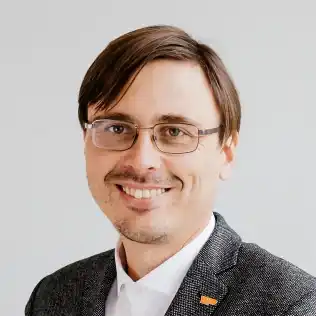
If you would like to find out more about the application of the services, please get in touch with us. Thomas Unger will be happy to be your contact person.
Telephone: 0351 438989-35
E-mail: thomas.unger@vufo.de
Send us an uncomplicated and non-binding inquiry. We will get back to you as soon as possible.
You are currently viewing a placeholder content from Vimeo. To access the actual content, click the button below. Please note that doing so will share data with third-party providers.
More InformationYou are currently viewing a placeholder content from YouTube. To access the actual content, click the button below. Please note that doing so will share data with third-party providers.
More InformationYou need to load content from reCAPTCHA to submit the form. Please note that doing so will share data with third-party providers.
More InformationYou are currently viewing a placeholder content from reCAPTCHA. To access the actual content, click the button below. Please note that doing so will share data with third-party providers.
More Information